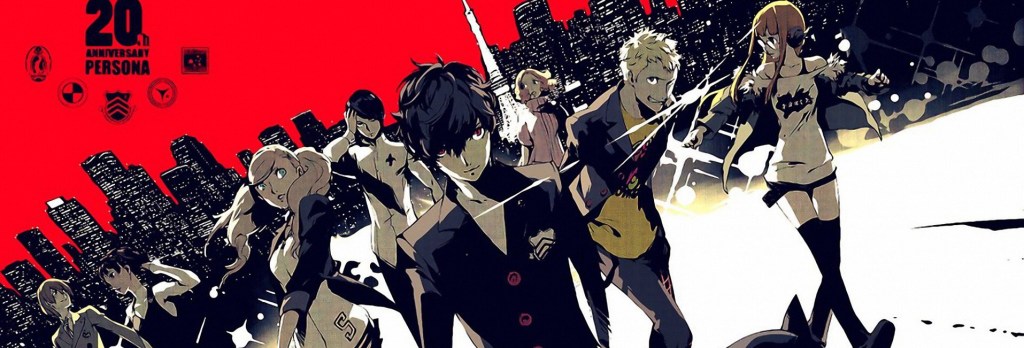
Attempting to balance solid, organic characters and challenging, fluid combat is where an RPG can thrive. Find that magic mix and I’m hooked for weeks. Give me a bland cast and engrossing gameplay, you have me for a few days. Give me stellar characters but keep me from engaging with them and you might as well just make a neat trailer. The balance Persona 5 achieves, and what 3 and 4 did as well to varying degrees, fundamentally tapped into the “grinding” part of my brain. Couple that with some solid new mechanics and static, explorable dungeons and Atlus really has crafted one hell of a game. I just wish it would have maintained its energy in the last quarter.
Persona 5 rests on a fairly solid, albeit familiar, structure with a few additions of mixed quality. The game is segmented into months and days, where you adorn the persona of the nameless protagonist and try to find the right mix of grinding, exploration, stat building, and fleshing out your contacts (social links). If you gave 3 or 4 a shot, then expect to feel right at home with the majority of the mechanics. The additions, however, are not all welcome.
Down all of the enemies in combat and you can still perform an all-out attack, but now you have the option to negotiate with enemies. This new mechanic is jarring. It interrupts the flow of combat—even the music shifts from a peppy, upbeat scat-filled jazz number to a guitar heavy, off beat almost grunge grind. It dichotomizes what should be a seamless experience. That is not to say the new interrogation segment has no value. I very much enjoyed this mechanic as the way to gain new personas, extra loot, and extra cash. But multiply the speed bump effect it creates by the large number of encounters in the game and I was simply worn out by the end. It is, however, tolerable when you run combat on fast forward, as the only time you really enter the negotiation phase is when an enemy initiates it as a result of being critically injured.
One of the staples of the Persona series has been the randomly generated dungeon levels, and I’m happy to say they make an appearance in 5. However, they are relegated to a side dungeon called Mementos, which opens up by degrees and is populated with enemies from previous Palaces. It is a rewarding side area, and the addition of bounty hunts (requests) really felt right at home with the characters and the general story. Additionally, I liked that weather and even seasonal allergies affect encounters. On numerous occasions I changed my plans for the day when I noticed a particularly advantageous weather pattern. It’s a neat mechanic.
Outside Mementos you traverse a series of static, well themed Palaces, and I cannot help but draw comparison here to another Atlus property, Tokyo Mirage Sessions FE. In many ways, TMS feels like the testing ground for the dungeons in Persona 5. And that is not a bad thing. There are ideas in TMS that appear refined and expanded in Persona 5, and more than once I had an “intuitive” sense of how to solve a problem based on my understanding of TMS’s dungeon design. Barring the similarity in layout, what propels Persona 5’s Palace mechanics is the addition of a cover based “sneak” mechanic. Sneaking toward and ambushing enemies is an extremely rewarding experience that is a welcome change from the wait-till-they-turn-around-and-charge methodology of the previous entries (although this methodology is still utilized in Mementos). I throughly enjoyed encountering a new room and working my way around the shadows taking out enemies. The mechanic, however, still needs some polishing. More than once I tried to move from cover to cover only to hop to the other side of the same pillar or wall—putting the enemy out of my view and forcing me to surface from cover and then reset. Several times, when on a particularly stealthy run, I was forced out of cover only to be struck by an enemy. I found this extremely frustrating, but it did not happen with enough frequency to rule out my poor skills as the culprit.
The enemy alert system was interesting, but unless I messed up royally or was force out of cover I never felt any pressure from it, as it always stayed near 0%. Additionally, any benefits received from one of my social contacts regarding the alert system seemed absolutely useless—to be fair, they may be essential on a higher difficulty rating. What struck me as odd was that each Palace had a particular mechanic to it, a gimmick, but as you move deeper into the game these mechanics do not stack. This made each palace feel similar: enter dungeon, discover mechanic, find route to treasure, defeat boss, move to next palace. Stacking the mechanics would force me to remember how I tackled pervious problems and then adapt those skills to face new challenges. It’s a missed opportunity in my opinion.
The framing mechanism for Persona 5, certainly the first three quarters of it, drew me in. The story starts in media res, the flash forwards are rewarding, and the game really builds a sense of mystery and anticipation. Yet, this is where my chief issue with the game surfaces. What should have been a rewarding payoff when you reach the “present” really falls apart into a loose series of cliche moments, odd plot choices and explanations, and a completely unfulfilling ending. This is not to say there is no logic to the events, there is, it just operates on terms that are, to me, inconsistent with the pacing and structure of just about everything that comes before it. Further, the game eschews delving into how things came to be for the characters (far more interesting considering the direct connections to one of the party member) and instead focuses on dealing with how to stop things from being the way they are. I am not blind to the power focusing on the end as opposed to the beginning can present (sometimes the mysterious nature of things is intriguing) and don’t want to suggest that there are no answers to many of these things (there are), it’s just that everything felt unresolved for me. What’s sad is that after dumping 125 hours into the game, I do not have the will to go back for resolution.
Persona 5 is a large game, and I have only touched on the things that interest me. It certainly is worth playing, but it has some issues here and there. Please understand, it’s not that Persona 5 is not a deeply rewarding gaming experience—the game simply embodies too many refined things—it just lost all sense of energy in the last quarter.


Leave a Reply